Are Free Walking Tours Worth It In Melbourne? An Honest Look
Are free walking tours worth it? A plain answer for Melbourne: what you get, how pay what you want works, the catches, and which of the city's five free walks suit which visitor.
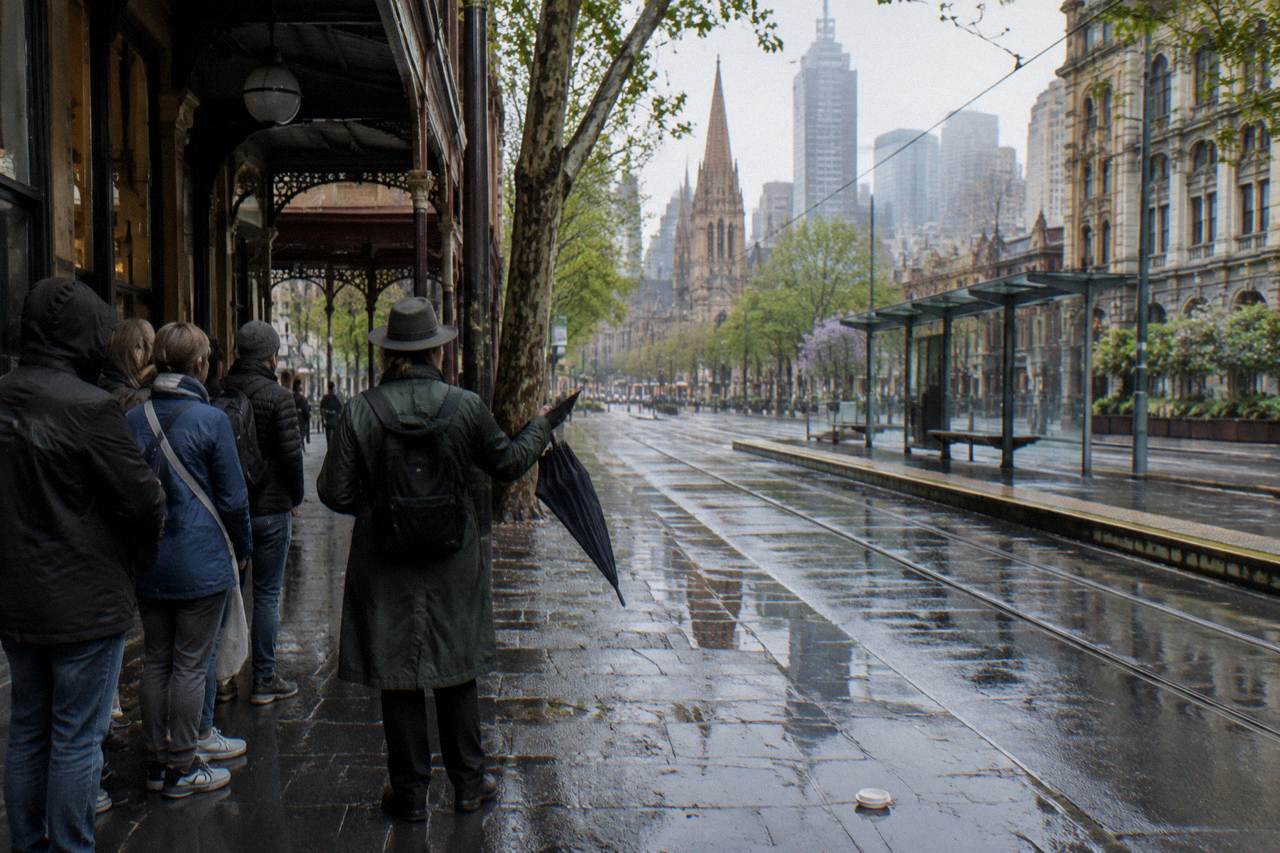
The pay what you want walking tour is one of the most common first activities travellers book in a new city, and also one of the most argued about. Someone always insists the guides are exploited, someone else swears it was the best two hours of their trip, and the person asking the question is left no wiser. Melbourne makes a useful test case because the city has a small, checkable roster: five free walks in total, four listed on GuruWalk and one exclusive to freetour.com, all run by independent local guides, all genuinely free to join.
This page works through the question properly. What you actually get, how the money side works, where the catches are, and which of the Melbourne walks suit which kind of visitor. No walk on this site is operated by us; this is a directory that points at other people's tours, which is exactly why every listing is named with the platform it lives on. If you are building a whole budget itinerary around the city, Free Things To Do In Melbourne collects the walks alongside the galleries, gardens and markets they pass.
What Do You Actually Get On A Free Walking Tour In Melbourne?
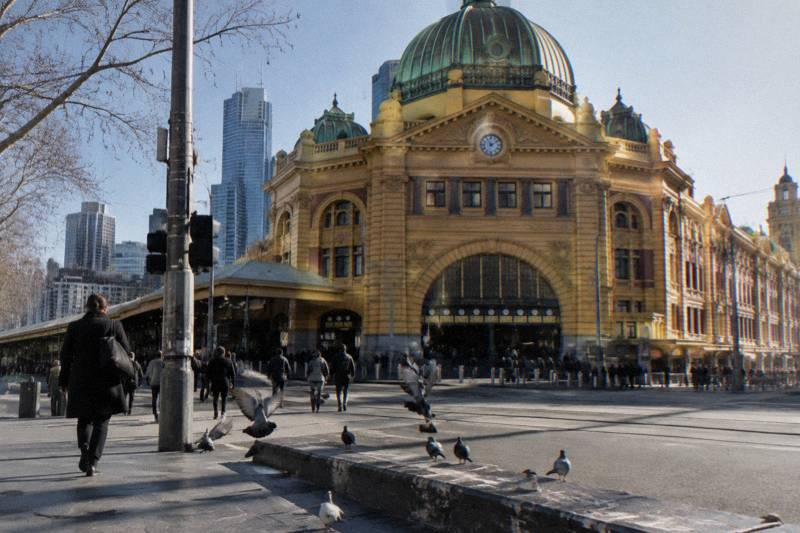
You get a two to two and a half hour guided walk through the Melbourne CBD or Southbank with an independent local guide, covering the laneways, Federation Square, the Yarra riverbank and the stories behind them, in English, for no upfront payment at all. Every walk on this site's roster asks for nothing at booking and settles up in tips at the end. The walks are not stripped down versions of paid tours. They hit the same headline sights a visitor wants on a first day: Hosier Lane's street art, Flinders Street Station, Fed Square, the arcades, the river. What varies is the guide's angle and the patch of ground covered.
The 2-Hour City Overview Walk, rated 4.94 across 1,463 GuruWalk reviews, meets on the steps of Federation Square under an orange umbrella and works through the central grid. The Southbank Riverside Walk, rated 4.96 across 56 GuruWalk reviews, starts at the Red Stair Amphitheatre on the Yarra's south bank and gives the river and arts precinct their own two hours. The Complete City Sights Walk, rated 9.6 out of 10 across 3,592 freetour.com reviews, runs two and a half hours from the State Library of Victoria, the longest of the five. That is a real spread of coverage, not five copies of the same route.
What you also get is a local's filter. Guides on these walks live in the city and answer questions as they go: where to eat tonight, which of the free museums and galleries in Melbourne is worth the detour, whether the penguins at St Kilda are a realistic evening plan. A guidebook or a search result can list the sights; it cannot tell you which coffee lane is overrated this month.
Here is the full roster at a glance, so you can see the ground, duration and review history side by side before reading further:
| Walk | Platform | Meets at | Duration | Rating |
|---|---|---|---|---|
| Complete City Sights Walk | freetour.com | State Library of Victoria, 328 Swanston Street | 2h 30min | 9.6/10 across 3,592 freetour.com reviews |
| 2-Hour City Overview Walk | GuruWalk | Federation Square, orange umbrella | 2 hours | 4.94 across 1,463 GuruWalk reviews |
| Icons, Details And Stories Walk | GuruWalk | Flinders Street Station, under the clocks | 2h 15min | 4.89 across 46 GuruWalk reviews |
| Southbank Riverside Walk | GuruWalk | Red Stair Amphitheatre, Southbank | 2 hours | 4.96 across 56 GuruWalk reviews |
How Does Pay What You Want Actually Work?
You book a spot for free, turn up at the meeting point, walk, and at the end the guide makes clear a tip is how they are paid, with the amount entirely up to you. Nothing is charged at booking, there is no minimum, and no walk on this roster asks for a card in advance. The guide's entire income for those two hours is what the group hands over at the finish. That is the whole mechanism, and it is worth being straight about what it implies: the tour is free in the sense that you decide the price after you have seen the product.
The model works because it aligns incentives unusually well. A guide who phones it in earns less that afternoon, visibly and immediately. A guide who tells good stories, answers questions and adjusts the pace to the group watches that translate into tips on the spot. Melbourne's roster shows the effect in the ratings: 4.94 across 1,463 GuruWalk reviews for the city overview walk is not a fluke, it is more than a thousand people walking away and then rating the experience highly enough to bother.
How much to tip is its own question with no fixed answer, and it genuinely depends on the city and your budget. If you want to think it through properly, we cover the norms and the reasoning in how much to tip on a free walking tour. The short version: if the walk replaced something you would have happily paid for, tip in that neighbourhood; if it did not, tip what it was worth.
One honest caveat. The word "free" does the model no favours when people take it literally. The guides are working, this is their job, and a group that walks away paying nothing because the tour was "free" is the model's one real failure mode. Treat it as pay what you want, not pay nothing.
Are Free Walking Tours Worth It?
For most visitors to Melbourne, yes: you get a local guide, the headline sights and a first-day orientation for a price you set yourself, and the roster's ratings, from 4.89 to 4.96 on GuruWalk and 9.6 out of 10 on freetour.com, reflect thousands of walkers who judged the experience worth paying for. The exceptions are visitors who want a private pace, a niche theme, or coverage outside the CBD and Southbank. That is the honest shape of the answer, and the rest of this section explains which side of it you fall on.
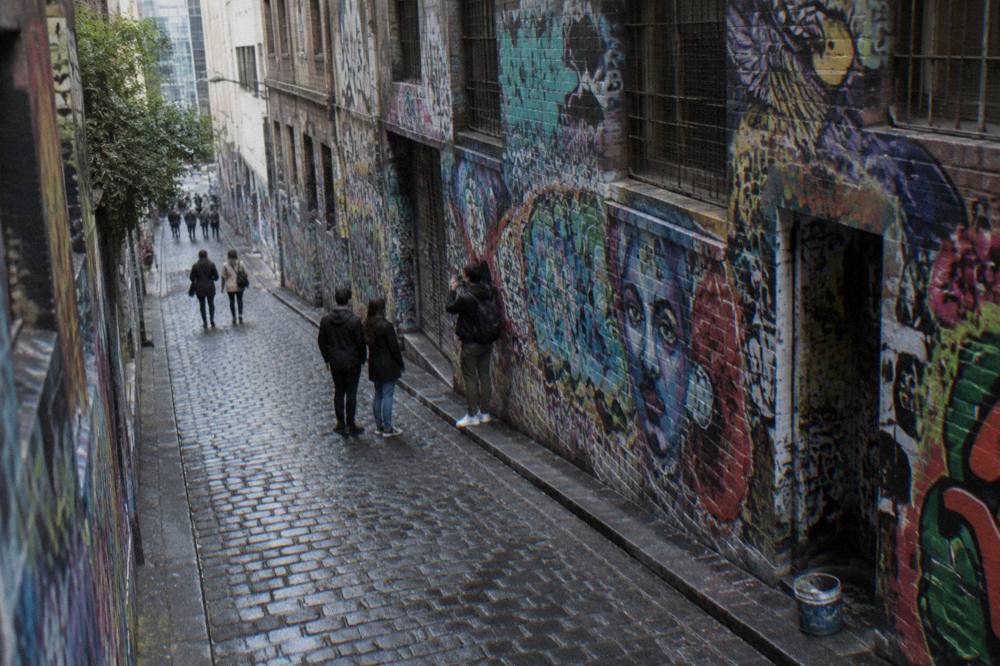
The case for starts with orientation. Melbourne's CBD is a grid, which sounds easy, but the city's real character hides in the laneways and arcades that a first-time visitor walks straight past. Two hours with someone who knows Hosier Lane from the ten other lanes that look identical on a map saves you a day of figuring it out alone. The walks are also a natural first-morning activity: do one on day one and the rest of your free things to do in the Melbourne CBD snaps into a mental map.
The case against is mostly about fit, not quality. Free tours run on shared group dynamics, so a couple wanting a slow, photography-heavy wander will move at the group's pace. The roster here is also deliberately thin: five walks, all covering the CBD and Southbank, nothing in Fitzroy, Carlton or the inner north. If your interest is a specific theme, the street art of Hosier Lane or the Shrine of Remembrance or a deep architecture dive, a general walk will touch it and move on.
Then there is the value question, which cuts both ways. When a walk is good, the tip you happily hand over usually still lands well below a fixed-price paid tour, and the guide has earned it in front of you. When a walk is mediocre, you pay less, which is a fairer outcome than being locked into a ticket. The risk transfer is the point: pay what you want moves the "was it worth it" gamble from you to the guide.
Which Melbourne Free Walking Tours Suit Which Visitor?
The 2-Hour City Overview Walk from Federation Square suits a first-day visitor wanting the core CBD; the Complete City Sights Walk from the State Library suits anyone wanting the longest route at two and a half hours; the Southbank Riverside Walk suits river, arts precinct and skyline views; and the Icons, Details And Stories Walk suits returning visitors who have seen the big sights and want the small ones. Matching the walk to the visitor matters more here than in most cities, because Melbourne's five walks overlap less than their titles suggest.
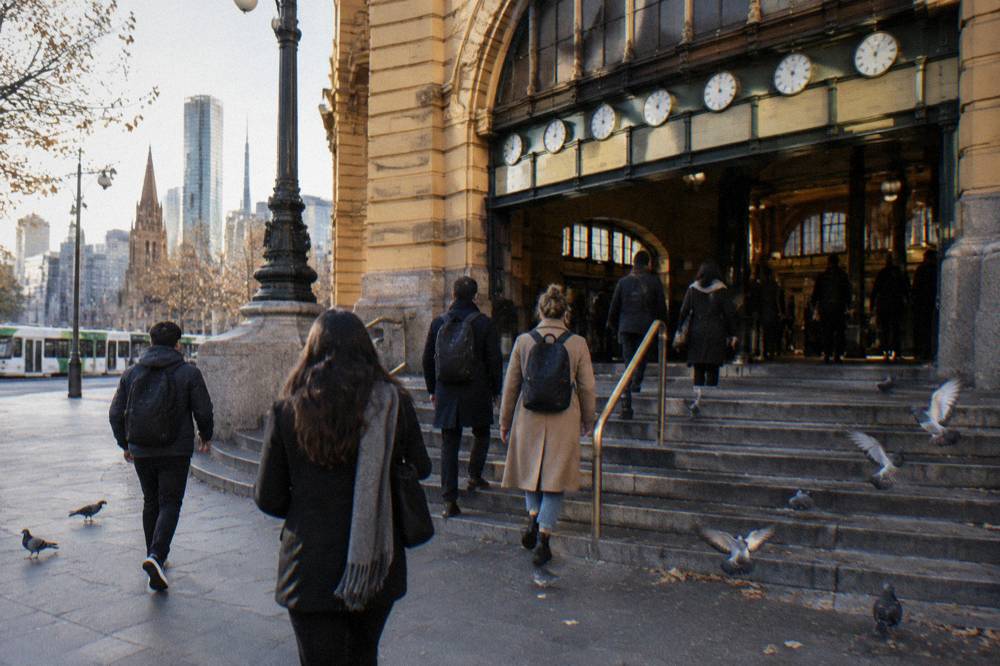
The Icons, Details And Stories Walk deserves its own paragraph because its ground is its selling point. It meets under the clocks at Flinders Street Station, corner of Flinders and Swanston, and spends 2 hours and 15 minutes on the details other walks pass: the carvings, the dates, the small stories embedded in buildings you would otherwise photograph without looking. It is rated 4.89 across 46 GuruWalk reviews, a smaller sample than the overview walk's 1,463 but a consistently high one, and it is the walk we would point a second-time visitor towards. You can see it on the Icons, Details And Stories Walk page.
For the others, the choice is mostly about ground and duration. The Complete City Sights Walk, the freetour.com exclusive run by I'm Free Tours from the State Library of Victoria, is the longest at 2 hours 30 minutes and the most reviewed anywhere on this roster. The Southbank Riverside Walk is the only one on the river's south side, and the only one that gives the arts precinct and the Yarra proper attention. The 2-Hour City Overview Walk is the safest default for a first day, with the deepest review history on GuruWalk.
There is also a fifth GuruWalk walk, History, Art, Local Culture, which meets at Federation Square under a red umbrella. It carries 14 reviews at a 3.14 rating, and we do not feature it as a pick for that reason. It exists, it is free, and a reader who wants to weigh it themselves can find it on GuruWalk, but the numbers do not support recommending it over the others.
A practical note on sequencing, because the meeting points make it easy. The State Library and Federation Square are a ten minute walk apart, and Flinders Street Station sits at the bottom of the same Swanston Street spine, so you can scout all three meeting points in one stroll the evening before. Southbank's Red Stair Amphitheatre is directly across the river from Fed Square. If you are fitting a walk around other plans, the two hour walks leave more slack in a day than the two and a half hour Complete City Sights Walk, which is worth remembering if you have a gallery booking or a market afternoon stacked behind it.
What Are The Catches, And How Do You Avoid Them?
The catches are four: groups can be large in peak season, the model depends on you tipping fairly, no walk on this roster covers anything outside the Melbourne CBD and Southbank, and the freetour.com walk's rating scale reads out of 10 rather than out of 5, which trips up comparisons. None of these are reasons to skip the walks, but all four are worth walking in with your eyes open.
Group size is the most common complaint about free tours anywhere, and Melbourne is no exception. A popular walk on a summer weekend can gather a crowd where a paid small-group tour would cap numbers. The fix is scheduling: a weekday morning walk almost always means a smaller group than the same walk on a Saturday afternoon. Booking rather than just turning up also helps the guides plan.
The rating-scale catch is worth a sentence because it is easy to misread on this site specifically. The Complete City Sights Walk's 9.6 out of 10 across 3,592 freetour.com reviews is not "9.6 stars", it is freetour.com's own ten-point scale, and it sits alongside the GuruWalk walks' five-point figures without conversion. A 9.6 out of 10 and a 4.94 out of 5 are both excellent; neither should be written as the other.
The coverage gap is the last one, and it is a design fact of this roster rather than a flaw in the walks. Five walks, two patches of ground, everything else uncovered. If your Melbourne plans centre on St Kilda, Fitzroy or the inner north, a free walking tour from this roster will not serve them, and pretending otherwise would be dishonest. The cheap things to do in Melbourne are a better starting point for those areas.
Free Tour Or Paid Tour: Which Should You Book?
Book the free walk if you want a general first-day orientation, a flexible budget and the freedom to pay what the experience turns out to be worth; book a paid specialist tour if you want a niche theme, a small guaranteed group or coverage beyond the CBD and Southbank. For a first visit to Melbourne, the free walk first, specialist tour later sequence is almost always the right order. The two products are not really competitors, and the strongest itinerary uses both.
The paid side of Melbourne's tour market earns its money on depth: a dedicated street art workshop, an architecture walk with an academic, a food tour through Queen Victoria Market's traders. Those experiences are worth their ticket when the theme is what you came for. What the paid market cannot offer is the free walk's specific advantage, which is a zero-risk first pass over the city that ends with you paying exactly what it was worth to you, decided after the fact.
There is a middle path worth naming too. Use the free walk as reconnaissance for the paid one. Two hours with a guide will tell you which laneway you want to photograph at dawn, which gallery wing deserves a full afternoon, and which paid experience matches what you actually responded to. Walkers who do this tend to book fewer paid tours and enjoy the ones they book more, because the free walk has already filtered the city for them.
The verdict, then, is not a yes or a no but a sequence. Start with a free walk on day one, tip it honestly, and let what you learned decide whether day two needs a paid specialist or nothing but the free attractions the guide pointed out. With five walks rated between 4.89 and 4.96 on GuruWalk and 9.6 out of 10 on freetour.com, Melbourne's roster is small but consistently strong. Start with the ground you most want to see, check the guide's meeting point, and pay at the end what the two hours were actually worth.
Common Questions About Free Walking Tours In Melbourne
Are free walking tours worth it?
For most visitors, yes. You get a local guide, the headline sights and a first-day orientation for a price you set yourself after the walk, and Melbourne's roster backs that up with ratings from 4.89 to 4.96 on GuruWalk and 9.6 out of 10 on freetour.com. They are less suitable if you want a private pace, a niche theme or coverage outside the CBD and Southbank.
Do you have to tip on a free walking tour?
There is no obligation and no minimum, but the tip is the guide's entire income for the walk. The convention on Melbourne's walks is the same as anywhere: if the two hours were worth paying for, tip accordingly. The model only survives because most walkers do.
Are Melbourne free walking tours really free?
Yes. Every walk on this site's roster is free to book and free to join, with no card charged in advance and no minimum spend. The guides are paid from tips collected at the end, which is why the tours are described as pay what you want rather than free in the strict sense.
Which free walking tour in Melbourne is the best?
The 2-Hour City Overview Walk has the deepest history, rated 4.94 across 1,463 GuruWalk reviews. The Complete City Sights Walk is the longest at 2 hours 30 minutes and the most reviewed overall at 9.6 out of 10 across 3,592 freetour.com reviews. The Southbank Riverside Walk is the only one covering the river's south side. The best one is whichever patch of ground you most want to see.
Where do Melbourne free walking tours meet?
Each walk has its own meeting point: Federation Square for the 2-Hour City Overview Walk, the State Library of Victoria for the Complete City Sights Walk, under the clocks at Flinders Street Station for the Icons, Details And Stories Walk, and the Red Stair Amphitheatre on Southbank for the Southbank Riverside Walk. Guides carry or wear identifying markers like an orange or red umbrella.
Can you do a free walking tour outside the Melbourne CBD?
Not on this roster. All five walks cover the Melbourne CBD and Southbank only, and there are no free walking tours listed for Fitzroy, Carlton, St Kilda or the inner north. For those areas, the free attractions themselves, galleries, gardens and markets, are the better plan.